
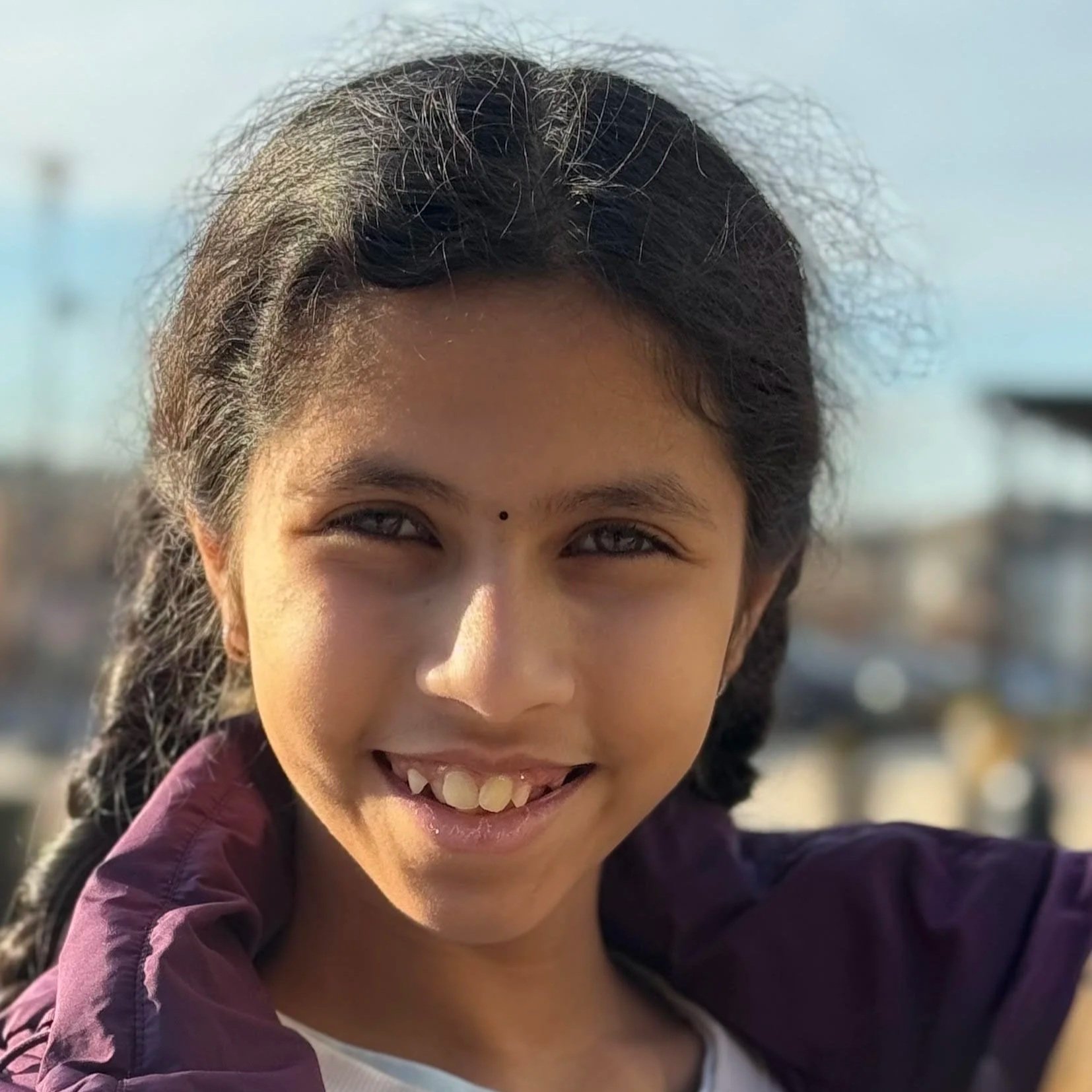
Naga Prerani Kasula
Middle School Winner, Grade 7
Apex, NC
Project Shakti - Every Daughter Matters
Sometimes the things that affect us the most are those we could never control. Growing up, I learned that my father and his family deserted my mother and me as they didn’t want a girl child. This experience made me realize that son preference is not just an issue discussed in reports; it's a reality that judges a person’s value even before they are born. 2020 United Nations Population Fund report estimated that 46 of the global 142 million missing females due to infanticide are from India. Although India has made significant progress in education, healthcare, and opportunities for women, deep-rooted beliefs continue to lead to female infanticide.
Female infanticide has an impact at an individual level and society at large. Adding to a life being lost, it creates a gender imbalance, causing forced marriages, trafficking, and violence against women. Each girl killed is also a lost opportunity in how they could have contributed to their family’s and nation’s overall development and its economic potential. This makes female
infanticide one of India’s most pressing development issues.
The roots of this problem lie in underlying cultural norms that have been passed down for generations. Traditionally, sons are expected to carry the family name, inherit property, and support their family financially, while girls are viewed as a financial burden with traditions like dowry. The pressure also comes from extended family members. A 2022 Pew Research Center survey found that 94% of Indians considered having a son important, showing how deeply these beliefs remain.
India has taken several steps to address this issue. The PCPNDT Act banned prenatal sex determination for non-medical purposes, while recent programs such as Beti Bachao, Beti Padhao and the Sukanya Samriddhi Yojana encourage families to value and invest in daughters. These efforts helped improve awareness and opportunities for girls. However, laws cannot easily change underlying beliefs. Illegal practices still continue in areas with weak enforcement, and awareness campaigns often overlook the influence of extended family members. While these efforts led to some progress, they largely focus on reacting to illegal practices or raising awareness rather than changing the beliefs that cause them.
I propose Project Shakti, which combines technology with long-term education. It’s a 3-pronged approach: Predict: Build an AI-based solution that monitors metrics such as sex-ratio at birth, girls vs. boys school enrollment data, and healthcare data to identify locations with unusual patterns suggesting female infanticide and helping proactive actions from the government to organize focused inspections, resources, and concentrate on potentially problematic areas through integration with local gram panchayats. Persuade: Replace punishment-based methods to reward based approach to incentivize local communities demonstrating positive changes in gender imbalance metrics, encouraging others to follow suit. Prevent: Introduce a “future families” curriculum at middle and high school level and teach students about gender equality, respectful relationships, and shared responsibilities within families, thus breaking the cycle for future generations’ beliefs. These solutions can be improved over time.
People in the United States can contribute by supporting the technology and research needed for Project Shakti. U.S. universities and corporations can partner with Indian NGOs, support philanthropic funding, and help expand community-led awareness programs to solve problems at a grass-root level, but from a global perspective. True progress will happen when society not only prevents discrimination against girls but also changes the underlying beliefs. In conclusion, though India has made progress in reducing gender discrimination over the years, son preference remains a deeply rooted issue that requires innovative solutions. True development will only happen when every child is valued equally based on their real potential and not their gender.