
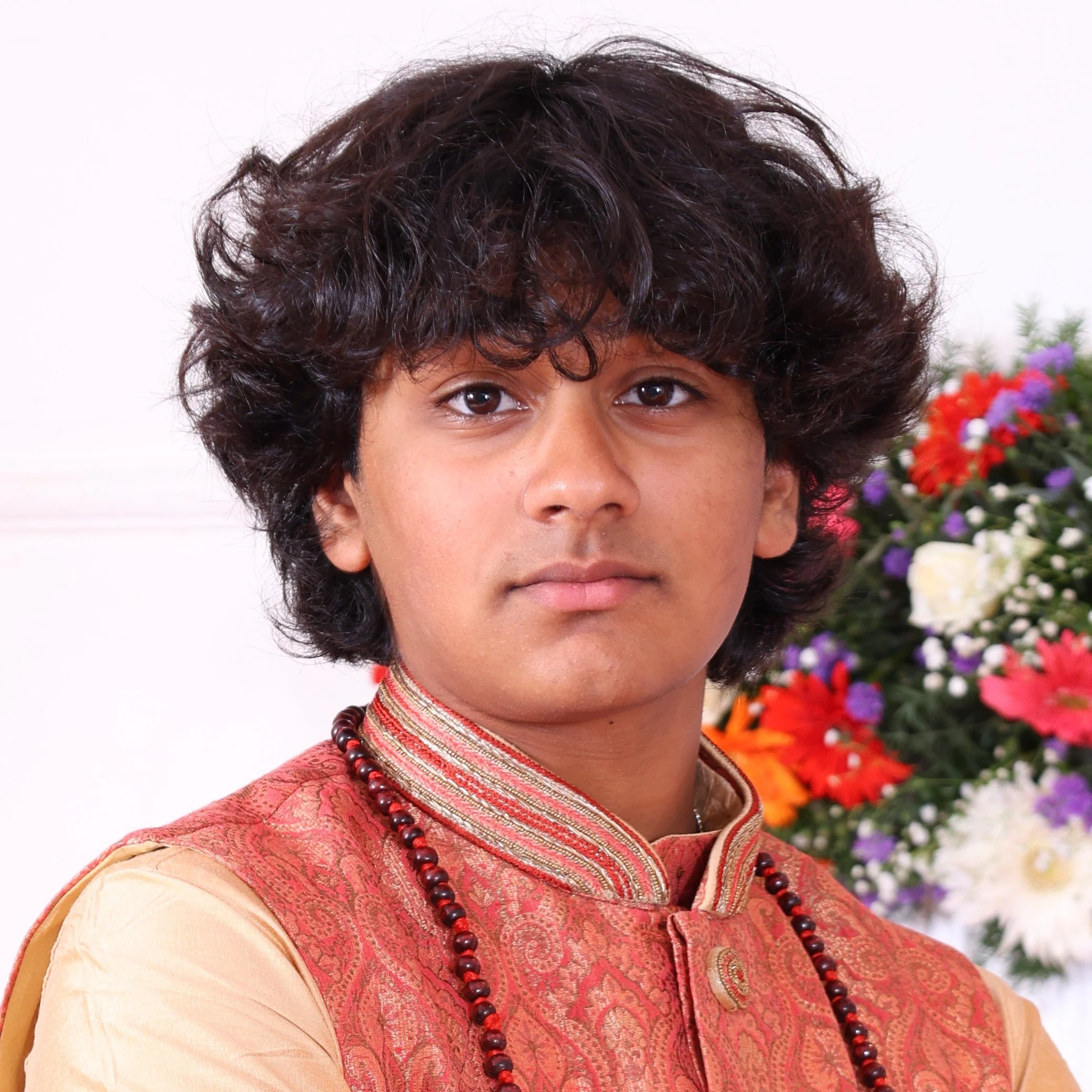
Krishna Pegadaraju
High School Finalist, Grade 10
San Diego, CA
Water insecurity
In the United States, this is something we take for granted. When I visited Vijayawada, I had a harsh reality check: a hot afternoon left me searching for water and reflecting on a privilege I had always taken for granted. But for 600 million people in India, water insecurity is not just a few months once or twice; it is a daily reality, where millions walk miles for a single bucket of water that might not even be safe to drink. (Chaudhuri et al., 2020) This water crisis is not merely a resource shortage; it threatens public health, educational opportunity, and the future of millions.
"India is home to around 18% of the world's population but only 4% of its freshwater resources—an imbalance that has placed approximately 600 million people into extreme water stress” (NITI Aayog, 2018). As demand is projected to exceed available supply by 2030, India’s water crisis is not only an environmental concern but also a fundamental barrier to health, equity, and economic survival. NITI Aayog warns that water scarcity could ultimately cost India up to 6% of its GDP (NITI Aayog, 2018).
The most immediate impact is on public health. Approximately 200,000 people die every year due to inadequate access to safe water (NITI Aayog, 2018). For those in rural communities, the lack of clean water and sanitation creates a cycle of poverty and disease that begins in early childhood.
It’s also a crisis that disproportionately impacts women and girls, as in rural communities women and girls bear the burden of collecting water for their families, which is an exhausting chore that routinely cuts off their access to education. When schools lack proper drinking water and sanitation facilities, girls are frequently forced to miss lessons or drop out. As the S M Sehgal Foundation notes, educating girls is the "gateway to the health and well-being of entire communities." Yet, this gateway remains locked for millions who cannot access a clean tap or a private toilet.
The roots of this crisis are embedded in India's agricultural sector, which consumes 80% of the nation’s freshwater. Traditional flood irrigation wastes enormous amounts of water. As groundwater levels continue to decline, the lack of efficient water management—such as the transition to drip and sprinkler irrigation—threatens not only the livelihoods of smallholder farmers but also the nation's future water security.
Because agriculture consumes 80% of India’s freshwater, the best place for conservation is in the fields. While organizations such as the S M Sehgal Foundation have successfully introduced drip and sprinkler irrigation, a critical next step is developing low-cost subsurface water recovery systems for smallholder farms. Capturing and reusing excess irrigation water can reduce groundwater extraction and lower operational costs, preventing valuable water from being lost to deep drainage. However, reclaiming agricultural water is only half the battle; the groundwater that 85% of Indian villages rely on must be treated directly at the source.
Implementing low-cost purification technologies—such as those promoted by the WHEELS Global Foundation—can dramatically curb waterborne disease. Technologies like the Maji Reactor can eliminate bacteria without electricity or chemicals.
Beyond community-wide infrastructure, breaking the cycle of water scarcity requires investing directly in campus WASH facilities to keep girls in school. The Sehgal Foundation’s “Transform Lives one school at a time” program has already benefited over 70,000 schoolchildren by building clean taps and private toilets on campus. By scaling these efforts, we create a secure environment where girls no longer have to sacrifice their education for water that may not even be safe to drink; by allowing them to stay in the classroom, we enable them to live a dignified life.
Having grown up in the diaspora, I have seen how clean water is an invisible guarantee, whereas in rural India it remains a daily struggle. I believe the diaspora can play a much larger role in addressing this challenge. As a student, I plan to establish a network of student-led chapters in American high schools dedicated to supporting water security projects in India. These chapters would raise awareness through educational events, organize fundraisers, and partner with organizations such as the WHEELS Global Foundation and the S M Sehgal Foundation to fund measurable projects, such as school WASH facilities and water purification systems.
Using social media campaigns, virtual presentations, and annual impact reports from organizations would allow students to see exactly where their contributions are going and how many children are benefiting. As someone interested in technology and community building, I would develop a centralized website to track fundraising progress, showcase sponsored schools, and share student stories from India.
My goal is not simply to raise money but to build a diaspora youth who view philanthropy not as a job but as a responsibility. By connecting students in the United States with students in India, we can create a lasting partnership that provides clean water, improves school attendance, and allows thousands to pursue their education.
To give a child clean water is to give them a future. And that begins with the right to a life of dignity.